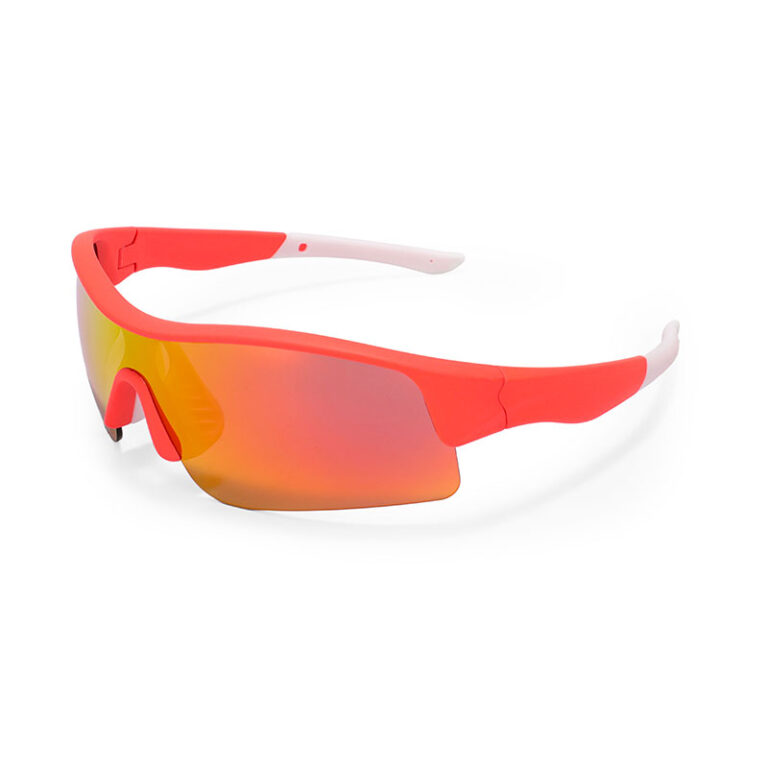
Two lens technologies dominate sports sunglasses spec sheets today: polarized and photochromic. Both reduce glare, but they solve different problems. Understanding where they overlap and where they diverge is essential when building a coherent product line.
How Polarized Lenses Work

Polarized lenses filter horizontally oriented light, which is the dominant component of glare reflected off water, roads, and snow. A polarizing film is sandwiched between two lens layers during lamination. The result is a steady reduction in reflected glare across all lighting conditions.
Polarized lenses are the default choice for fishing, cycling on wet roads, and water sports. They hold a fixed Visible Light Transmission value, typically between 10% and 18% for outdoor sports, which gives athletes a predictable visual experience.
How Photochromic Lenses Work
Photochromic lenses contain molecules that darken under UV exposure and lighten indoors or under cloud cover. The transition takes roughly 30 seconds to darken and two to five minutes to clear, depending on ambient temperature.
This technology is ideal for sports where lighting changes frequently: trail running, gravel cycling, or early-morning baseball games that move from shade to full sun. Photochromic lenses typically shift between a VLT of roughly 85% indoors and 15% in full sun.
Where They Overlap
<

p>Photochromic-polarized lenses combine both technologies into a single lens. They reduce glare while adapting to light levels, but they carry a higher unit cost and require more careful lamination. Julong offers this combination on polycarbonate and nylon substrates.
Which One to Spec for Your Line
A practical approach is to offer polarized as the base option and photochromic as the premium upgrade. Most Julong clients launch with two or three fixed polarized tints (grey, amber, mirrored) plus one photochromic SKU. This keeps inventory simple while covering most end-user use cases.
Testing and Quality
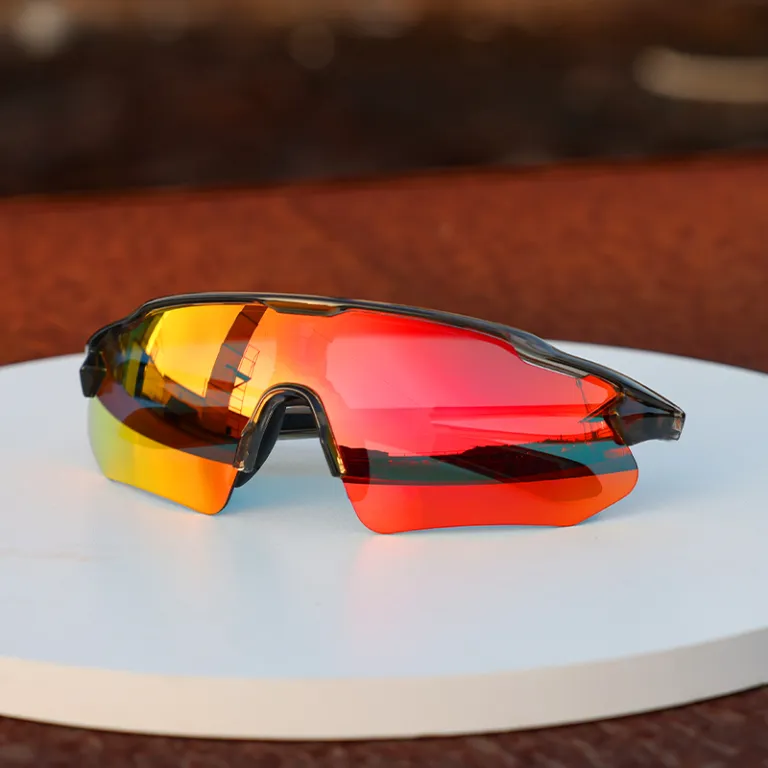
Every lens we ship is tested against EN166, EN167, and EN174 standards for optical clarity and impact resistance. We run drop-ball, UV-transmission, and hinge-cycle tests on every batch before shipment.